EDUCATION HUB
SERVICE DOG LAW
Understanding the legal protections for service dog teams is essential for handlers, businesses, and the general public.
Americans with Disabilities Act
The ADA is the primary federal law protecting the rights of individuals with disabilities in the United States, including those who use service dogs.
Public Access Rights
Service dogs must be permitted in all areas of public facilities where members of the public are normally allowed. This includes restaurants, hotels, stores, hospitals, schools, and government buildings.
Two Permitted Questions
- Is the dog a service animal required because of a disability?
- What work or task has the dog been trained to perform?
When a Service Dog May Be Removed
- The dog is out of control and the handler does not take effective action
- The dog is not housebroken
- The dog poses a direct threat to health or safety
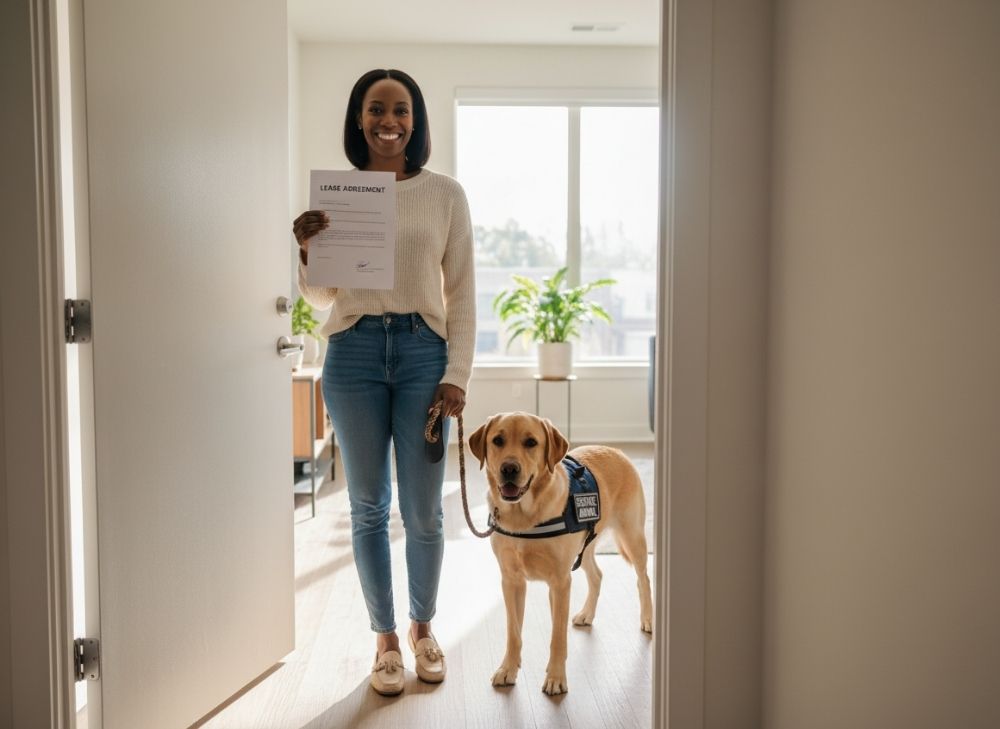
Housing Rights (Fair Housing Act)
The Fair Housing Act (FHA) requires landlords and housing providers to make reasonable accommodations for individuals with disabilities, including allowing service dogs and emotional support animals, even in "no pets" properties.
Key Protections
- Landlords cannot charge pet deposits or fees for service dogs
- Breed and weight restrictions do not apply to service animals
- Landlords may request documentation verifying disability-related need
- Covers apartments, condominiums, single-family homes, and public housing
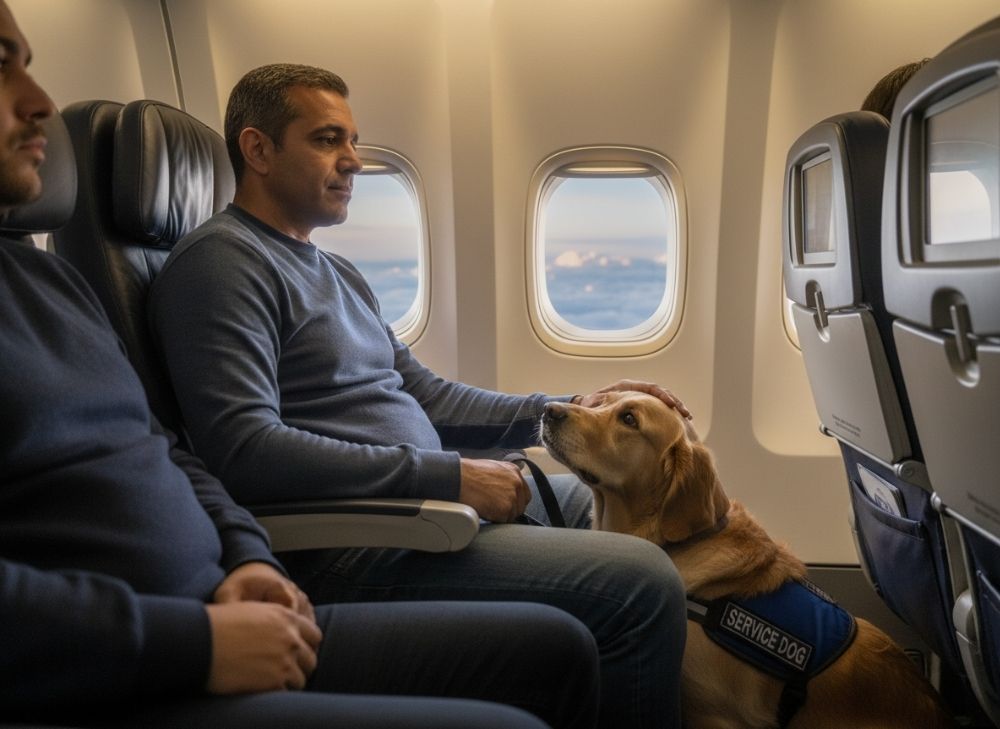
Air Travel (Air Carrier Access Act)
The Department of Transportation (DOT) issued a final rule in 2021 defining a service animal on aircraft as a dog individually trained to do work or perform tasks for a person with a disability. Emotional support animals are no longer covered.
Airline Requirements
- Airlines must allow trained service dogs in the cabin at no charge
- Handlers may be required to complete DOT Service Animal Transportation forms
- Airlines may require the dog fit within the handler's foot space
- Airlines can refuse a service dog that displays disruptive behavior
Employment (Title I of the ADA)
Employers with 15 or more employees must provide reasonable accommodations, which may include allowing a service dog in the workplace.
Employer Obligations
- Employers must engage in an interactive process to determine reasonable accommodations
- The employer may ask for documentation of the disability and how the service dog helps
- Allergies or fear of dogs in coworkers are generally not sufficient grounds for denial
- Employers can deny if the accommodation creates an undue hardship

State & Local Laws
Many states have laws that go beyond the ADA, offering additional protections for service dog teams. Some states also have laws penalizing the fraudulent representation of a pet as a service animal.
Common State Provisions
- Broader definitions of "service animal" that may include other species
- Criminal penalties for misrepresenting a pet as a service animal (fines from $100 to $1,000+)
- Mandatory training and certification in some states
- Protection for service dogs in training

International Service Dog Laws
Explore how different countries approach service dog protections and requirements around the world.
United States
Federal protection for service dogs in all public accommodations. No registration or certification required.
Canada
Each province has its own accessibility legislation. Ontario's AODA and British Columbia's Guide Dog and Service Dog Act are among the most comprehensive.
United Kingdom
Service dogs (called assistance dogs) are protected under disability discrimination provisions.
European Union
No unified EU law exists. France, Germany, and the Netherlands have strong protections.
Australia
Service dogs (called assistance animals) are protected federally. States may require certification.
International Guide Dog Federation (IGDF)
The IGDF is the worldwide umbrella body for guide dog schools, coordinating training standards, accreditation, and best practices across member organizations in over 30 countries.
CLARIFYING THE RULES
FREQUENTLY ASKED QUESTIONS
No. Under the ADA, staff cannot ask about the person's disability, require medical documentation, require a special identification card or training documentation for the dog, or ask that the dog demonstrate its ability to perform the work or task.
Generally, no. Service dogs must be allowed in public areas of restaurants, including dining rooms. They can only be excluded if the dog is out of control and the handler does not take effective action to control it, or if it is not housebroken.
No. The ADA does not require service animals to wear a vest, ID tag, or specific harness. However, many handlers choose to use them to clearly identify their working dogs to the public.
Under the Fair Housing Act, landlords generally must provide a reasonable accommodation to allow a service dog, even if they have a "no pets" policy, without charging a pet fee. There are rare exceptions for certain owner-occupied buildings or if the dog poses a direct threat.
While there is no federal penalty under the ADA for faking a service dog, many individual states have enacted laws that make it a misdemeanor to fraudulently represent a pet as a service animal, which can result in steep fines and, in some cases, jail time.
Yes. Under the Air Carrier Access Act (ACAA), airlines must allow trained service dogs in the cabin at no charge. Handlers may be required to fill out specific Department of Transportation (DOT) forms prior to travel.
Know Your Rights
Discover how you can support our programs and help us create a world where service dog teams are understood and respected.